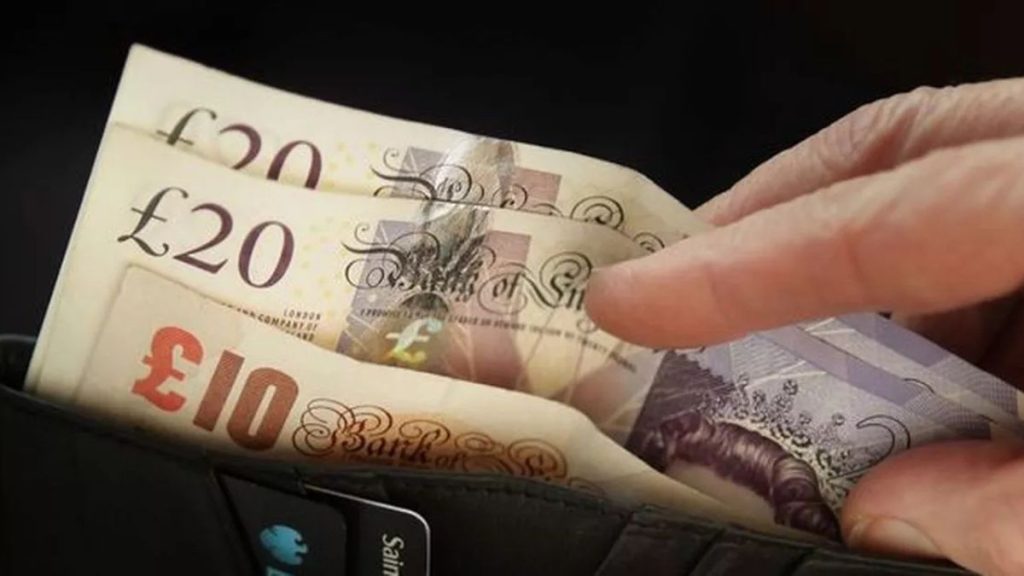
The UK Government has officially confirmed a new £300 bank deduction rule affecting pensioners, set to come into force from December. This update, linked to fresh HMRC regulations, has raised many questions among retirees, especially those relying on the State Pension and private pension income. While the term “bank deduction” has caused some concern, the actual purpose and impact of this new rule are being misunderstood by many.**
This detailed guide explains what the £300 deduction really means, who it affects, why HMRC has introduced it, and what pensioners should do next. If you or a family member receives a UK pension, this is essential reading.
What Is the £300 Bank Deduction for UK Pensioners?

The new £300 deduction is not a blanket penalty or fixed charge applied to all pensioners. Instead, it’s a targeted adjustment that may show up on some pensioners’ bank statements starting in December, triggered by HMRC’s upgraded tax reconciliation system.

Here’s what the deduction is actually linked to:
- Past underpayment of tax on pension income
- Incorrect tax codes used by pension providers
- Overpaid pension credits or other benefits
- Mismatches between reported income by banks, pension schemes, and HMRC systems
So, while the figure may appear alarming, it’s usually either a correction or a one-off recovery—not a regular or monthly deduction.
Why Has HMRC Introduced This New Rule?
The rule is part of HMRC’s efforts to modernise income tracking and tax correction through automation. Until now, many small tax errors—especially among older pension records—have slipped under the radar.
Latest Stories
 DWP Confirms New £500 Cost of Living Payments for 2025 – Check Your Eligibility and Full Details
The main goals behind the change include:
- Reducing unpaid tax balances
- Preventing pension or benefit overpayments
- Improving accuracy in PAYE and pension records
- Introducing real-time reconciliation to avoid errors going unnoticed
With banks and pension providers now reporting more data directly to HMRC, adjustments like the £300 deduction are expected to become more common—but also more accurate.
When Will the £300 Deduction Begin?
Although the new rule takes effect from December, that doesn’t mean every pensioner will see a deduction immediately. The implementation will be staggered based on individual reconciliation cycles.
Latest Stories
 Historic £649 Weekly State Pension Revealed for 2025 – Full Breakdown of Eligibility, Payment Rules, NI Requirements and Tax Impact
Key implementation stages:
- Banks and pension providers begin real-time data submission in December
- HMRC begins automated reconciliation of PAYE and pension income
- Deductions or adjustments may appear in December, January, or February
For many pensioners, the first indication of the rule in action will be a new line in their bank statement showing a £300 “adjustment”.
Who Will Be Affected by the £300 Deduction?
This is not a universal deduction. It applies only to pensioners who fall into one or more of the following categories:
Latest Stories
 £480 Universal Credit December Payment Approved – Full Eligibility, Dates, Rates and DWP Rules Explained
- Receive multiple pensions (State Pension + private/workplace pension)
- Recently switched pension providers or employment
- Received backdated pension or benefit payments
- Previously underpaid tax on pension income without realising
- Claimed benefits alongside pension payments (e.g., Pension Credit)
If your tax record is clean and updated, you’re unlikely to be affected.
Is the £300 Deduction Permanent or a One-Off?
In most cases, HMRC confirms the £300 is a one-off correction, not a permanent or recurring deduction.
But there are some exceptions:
Latest Stories
 DWP Confirms £562 Pension Boost – Check Who Qualifies and How to Claim Every Penny in 2025
- If your underpayment is larger, HMRC may spread the deduction over multiple months
- In such cases, the £300 might be just a first instalment
- HMRC may offer instalment plans to avoid hardship
The key takeaway: This is not a new monthly charge—it’s a targeted correction.
Will This Reduce State Pension Payments?
No. Your official State Pension rate remains unchanged.
However, the net amount received in your bank may appear lower if:
Latest Stories
 DWP Confirms £325 Universal Credit Boost for December 2025 — DWP Reveals Eligibility & Dates
- A tax adjustment is applied
- A deduction is recovered automatically via PAYE
- Your bank account reflects a “reconciled” payment value
This difference is administrative, not a reduction in entitlement.
How Will This Deduction Appear on Bank Statements?
Affected pensioners will not see “£300 Fine” or “Penalty” on their statements. Instead, you may notice entries such as:
- “HMRC Adjustment”
- “PAYE Correction”
- “Tax Reconciliation”
- “Income Tax Offset”
These labels reflect automated corrections and not disciplinary deductions.
Latest Stories
 UK Pensioners Hit by Major New Home Ownership Rules – DWP Confirms Crucial Changes for 2025
What Should You Do If You Notice a £300 Deduction?
If a deduction appears unexpectedly:
- Remain calm—it’s likely a legitimate adjustment
- Review your latest P2 tax coding notice
- Check letters or emails from HMRC for explanations
- Compare bank and pension statements
- Contact HMRC only if the deduction seems unjustified
In many cases, HMRC sends a formal notice after the deduction has already been processed.
Can Pensioners Challenge the £300 Deduction?
Yes, you have the legal right to dispute any HMRC deduction if you believe it is incorrect.
Latest Stories
 UK New Child Benefit Rules Arrive in December 2025 — Will Your Payments, Eligibility or Taxes Change?
Steps to challenge:
- Request a full breakdown of your tax history
- Submit evidence of corrected income
- Apply for hardship exemption or delay
- Request a refund if HMRC acknowledges an error
Pensioners are protected under HMRC’s fairness policy and can appeal through formal channels.
Will the Deduction Affect Pension Credit or Other Benefits?
Not directly—but there may be short-term effects on how your net income is assessed.
Latest Stories
 DWP Confirms Early December Payments for Millions — Will Your Universal Credit or PIP Arrive Sooner?
Potential impacts:
- Lower net income may delay benefit payments
- Temporary change in income could trigger reassessment
- Benefit levels should return to normal after reconciliation
Keep all correspondence from HMRC and DWP for reference.
Does This Apply to Private and Workplace Pensions Too?
Yes. The deduction system now applies across the following:

- State Pension
- Private pensions
- Occupational schemes
- Annuity income
All pensions reported via PAYE are within the scope of HMRC’s digital matching.
Why Are So Many Online Claims About This Rule Misleading?
Unfortunately, misleading headlines have spread confusion, such as:
- “All pensioners to lose £300”
- “New government tax on retirees”
- “£300 penalty confirmed by HMRC”
These are inaccurate. The truth is:
Latest Stories
 UK Government Confirms 2025 Minimum Wage Rise – What It Means for Millions of UK Workers and Employers
- The deduction is not universal
- It is not a penalty
- It is not permanent
- It is a reconciliation mechanism only
Always refer to HMRC or GOV.UK for the most accurate information.
How to Protect Yourself from Unexpected Deductions
To avoid being caught off guard:
- Keep your income details up to date with HMRC
- Inform them of any pension changes or new sources
- Check your tax code every year
- Keep copies of pension slips and benefit statements
- Review your bank account for unfamiliar entries
Being proactive will reduce the risk of future errors.

What If the £300 Is Taken in Error?
If HMRC confirms the deduction was a mistake:
- You will receive a full refund
- HMRC will stop future deductions
- Your tax code will be corrected
- A written confirmation will follow
- Refunds usually arrive within a few weeks
Financial Planning Advice for December 2025 and Beyond
Even if the deduction is a one-off, it could disrupt:
- Monthly budgets
- Direct debits
- Essential spending (e.g., food, energy, rent)
Pensioners are advised to maintain a buffer in their current account, especially through December to February, when reconciliations will be most active.
Government’s Official Position on the £300 Rule
HMRC and the UK Government have clarified:
- This is not a new tax penalty
- It is designed to correct historical discrepancies
- No one will be penalised without cause
- Flexible repayments will be allowed for hardship cases
- It supports a modernised, fairer tax system
This is about efficiency, not punishment.
Key Takeaways Every Pensioner Should Know
- The £300 figure is not a fine or fee
- It applies only to those with tax mismatches
- Most deductions are one-off corrections
- Your official pension rate is not reduced
- You can appeal or seek a refund if it’s wrong
- Being proactive protects you from future surprises